Top 10 Tips to Prevent Corrosion in Coastal Solar Mounting?

Time:2026-05-28 Author:Mason
0%

Corrosion in coastal solar mounting installations poses significant challenges. The combination of saltwater, humidity, and high temperatures accelerates the deterioration of metal components. According to a report by the National Renewable Energy Laboratory, corrosion can shorten the lifespan of solar installations by up to 30%. This highlights the importance of effective prevention strategies.

Dr. Lisa Monroe, an expert in renewable energy materials, once stated, “Understanding how to prevent corrosion in coastal solar mounting installations is vital for long-term sustainability.” Her insights emphasize the need for industry professionals to prioritize protective measures. Choosing corrosion-resistant materials and coatings can make a substantial difference.

Regular inspections and maintenance are equally critical. Ignoring these factors can lead to costly repairs and system failures. The data shows that proactive approaches can extend the operational life of solar mounts significantly. A focus on prevention, rather than remediation, fosters a more resilient solar energy infrastructure.
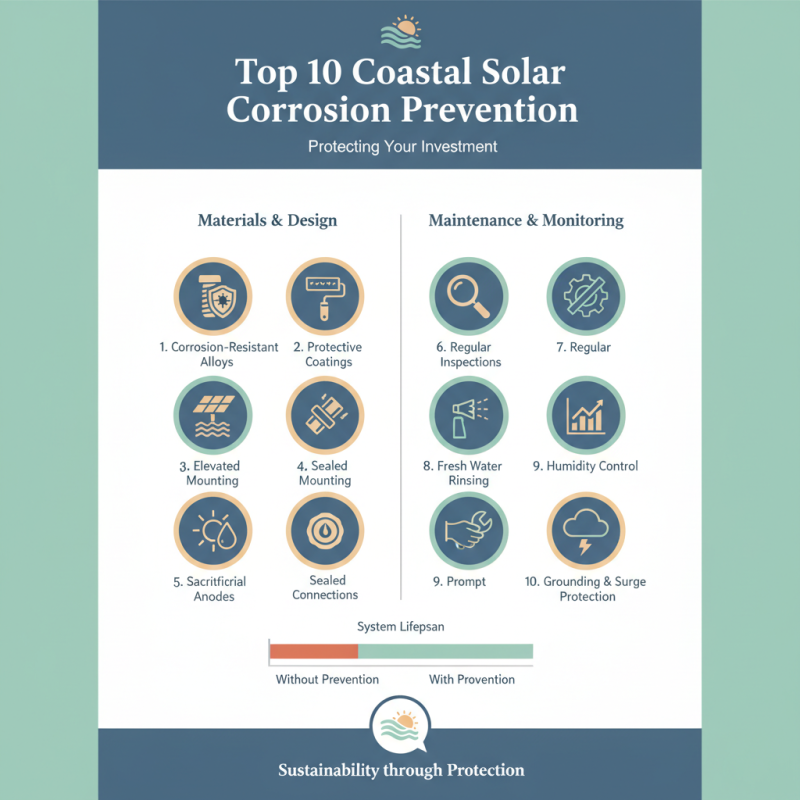
Top 10 Tips to Prevent Corrosion in Coastal Solar Mounting?

Understanding Corrosion and Its Risks in Coastal Solar Installations

Corrosion poses a significant risk to solar installations in coastal areas. High salinity, humidity, and temperature fluctuations accelerate corrosion on metal components. A recent report by the National Renewable Energy Laboratory indicates that corrosion can reduce the lifespan of solar mounting systems by up to 30%. Understanding this threat is crucial for maintaining the integrity and efficiency of solar energy systems.

To mitigate corrosion, opt for high-grade stainless steel or aluminum for mounting structures. These materials offer resistance against harsh coastal environments. Regular inspections can detect early signs of rust or wear. Adoption of protective coatings, such as galvanization or powder-coating, can further safeguard equipment. One study highlights that coatings can extend the equipment's life by two to three years.

Additionally, ensure proper drainage around mounting systems to prevent moisture accumulation. Ensure that installations are appropriately spaced to allow air circulation. This can help minimize adverse reactions caused by salty air. Implementing these strategies can keep your solar installation performing efficiently for years.

Top 10 Tips to Prevent Corrosion in Coastal Solar Mounting

Choosing the Right Materials for Coastal Solar Mounting Systems

Corrosion is a significant challenge for coastal solar mounting systems due to the harsh environment. Saltwater exposure accelerates the deterioration of metal components. Choosing the right materials is critical for durability. According to a recent report from the National Renewable Energy Laboratory, the lifespan of solar mounting systems can be reduced by up to 50% in coastal areas if not properly constructed.

Stainless steel and aluminum alloy are often recommended for such environments. Stainless steel, particularly grade 316, offers excellent resistance to saline corrosion. Meanwhile, aluminum is lightweight and resistant to rust, making it a viable option. However, even these materials can suffer degradation over time. Regular inspections can help identify early signs of wear.

Coating options like galvanized finishes or powder coatings can further enhance protection. Nevertheless, these coatings may wear out and require periodic reapplication. It's essential to account for this maintenance when designing the system. The choice of materials should consider both initial costs and long-term sustainability. Real data from solar projects indicate that investing in higher quality materials pays off by reducing maintenance frequency.

Implementing Protective Coatings to Enhance Durability

In coastal environments, solar mounting systems face unique corrosion challenges. Implementing protective coatings is crucial for enhancing their durability. Studies indicate that up to 60% of material failures are related to corrosion, especially in saltwater areas. This calls for specialized coatings that create a barrier against moisture and corrosive elements.

Epoxy-based coatings are popular choices for solar mounts. They provide excellent adhesion and resistance to salt exposure. An industry report from the National Renewable Energy Laboratory suggests that properly coated structures can extend lifespan by 30% or more. However, the quality of the application matters. Improperly coated surfaces can lead to premature degradation despite using high-quality materials.

Regular maintenance and inspection are essential. Protective coatings can wear down over time. Environmental factors, such as UV exposure, can compromise their effectiveness. A study by the Corrosion Engineering Association found that even minor maintenance could mitigate corrosion risk significantly. Completing these tasks routinely ensures that solar mounts remain in optimal condition. Enhancing durability through protective coatings is not only about using the right materials. It requires consistent vigilance and a commitment to excellence.

Regular Maintenance Practices to Prevent Corrosion Over Time

Coastal solar installations face unique challenges due to saltwater exposure. Regular maintenance is crucial in combating corrosion. Routine inspections can identify early signs of rust or wear. Schedule these checks at least twice a year. Focus on critical areas where metal parts connect. This helps catch issues before they escalate.

Cleaning is another essential practice. Using fresh water to wash off salt and debris can significantly enhance the lifespan of mounting systems. It’s a simple step but often overlooked. Employ soft brushes to avoid scratching surfaces. Inspect for any accumulation of dirt or contaminants, which can trap moisture and accelerate corrosion.

Consider applying protective coatings to metal components. Polyurethane or epoxy coatings offer additional resistance against harsh elements. However, application requires attention to detail and should be done during dry conditions. Regular re-evaluation of these coatings ensures they remain effective.

There's always a possibility that even with precautions, some parts may need replacement sooner than expected.

Design Considerations for Coastal Solar Installations to Minimize Damage

Coastal solar installations face unique challenges due to their environment. High humidity, saline air, and strong winds can accelerate corrosion. To minimize these risks, design considerations are crucial for longevity and efficiency. Choosing materials that are resistant to corrosion is vital. Stainless steel and aluminum are often preferred due to their durability.

In addition to material selection, proper ventilation helps in reducing moisture accumulation. Installing systems that promote airflow can prevent rust and deterioration. Use protective coatings on metal surfaces to provide an extra layer of defense. Regular inspection of components is essential. It is easy to overlook minor damages, but they can lead to bigger issues.

When it comes to the layout, positioning mounts strategically can mitigate wind damage. Elevating solar panels above typical wave levels can also prevent saltwater exposure. These simple yet effective strategies may require additional upfront costs, but they contribute to long-term savings. Over time, more installations will recognize the importance of these design choices. Ignoring these factors can result in costly repairs or replacements.

Top 10 Tips to Prevent Corrosion in Coastal Solar Mounting

Tip Description Effectiveness Cost
Use Corrosion-Resistant Materials Opt for stainless steel or aluminum frames and mounts. High $$$
Apply Protective Coatings Use epoxy or polyurethane coatings to protect surfaces. Moderate $$
Regular Maintenance Schedule inspections and cleaning to remove salt and debris. High $$
Install Corrosion Monitoring Systems Use sensors to monitor for early signs of corrosion. High $$$$
Optimize Drainage Ensure proper water drainage to prevent pooling around mounts. High $
Avoid Dissimilar Metals Use compatible metals to prevent galvanic corrosion. Moderate $
Proper Installation Techniques Follow guidelines to ensure secure and correct mounting. High $
Consider Environmental Factors Account for local weather conditions and salt exposure. High $
Educate Installation Staff Train staff on best practices for coastal installations. Moderate $

FAQS

: What is corrosion and why is it a concern for solar installations?

: Corrosion is the deterioration of metal caused by environmental factors. It can reduce the lifespan of solar installations significantly.

How does the coastal environment affect corrosion rates?

High salinity, humidity, and temperature changes in coastal areas accelerate corrosion on metal components in solar systems.

What materials are recommended for robust coastal solar mounting systems?

Stainless steel and aluminum alloys are often suggested for their excellent resistance to corrosion in coastal conditions.

How do protective coatings help solar installations?

Protective coatings create a barrier against moisture and corrosive elements, enhancing the durability of solar systems.

Why are regular inspections important for solar installations?

Inspections help identify early signs of wear, allowing for timely maintenance and preventing further corrosion damage.

What maintenance practices can mitigate corrosion risks?

Implementing proper drainage, checking for rust, and maintaining protective coatings can significantly reduce corrosion risks.

How can the quality of protective coatings affect their performance?

Poor application of coatings can lead to premature degradation, even if high-quality materials are used. Regular checks are essential.

What factors affect the lifespan of solar mounting systems in coastal areas?

Salt exposure, environmental conditions, and material degradation can all contribute to shorter lifespans for solar mounting systems.

Can the choice of materials impact maintenance frequency?

Investing in high-quality materials can reduce the need for frequent maintenance and save costs in the long run.

What role do environmental factors play in coating effectiveness?

Environmental elements, such as UV light, can wear down coatings over time, making regular maintenance crucial for durability.

Conclusion

Corrosion poses significant risks to coastal solar installations due to the harsh environmental conditions found in these areas. Understanding the nature of corrosion and its potential impacts is the first step in safeguarding solar mounting systems. Selecting the right materials that can withstand salty air and moisture is crucial. Additionally, applying protective coatings can enhance the durability of these installations, making them more resilient against corrosive influences.

Regular maintenance practices, such as inspections and cleaning, are essential for identifying early signs of corrosion and addressing them promptly. Furthermore, design considerations should focus on minimizing exposure to corrosive elements, ensuring optimal longevity for coastal solar mounts. By following these strategies, solar installation professionals can effectively learn how to prevent corrosion in coastal solar mounting installations, ensuring reliable and long-lasting performance in challenging environments.

Mason

Mason

Mason is a seasoned marketing professional with a deep expertise in the company's offerings and a passion for driving brand awareness. With a strong background in digital marketing strategies, he has an innate ability to connect with diverse audiences and effectively communicate product benefits.......