Coastal solar arrays work in a demanding environment. Salt spray, humid air, and wind-driven grit reach rails, clamps, and exposed fasteners. A pale crust on a bolt may seem harmless, but it can signal salt buildup. Over time, corrosion can weaken connections and complicate maintenance. Small details matter. A poorly isolated stainless-steel bolt against an aluminum rail, for example, may create conditions for galvanic corrosion when moisture is present. The visible damage is not always the whole story.
For owners asking “How to prevent corrosion in coastal solar mounting installations,” this guide examines seven practical measures: selecting suitable materials, applying protective coatings, isolating dissimilar metals, safeguarding fasteners, allowing water to drain, installing components carefully, and inspecting the system regularly. The right choices depend on the site, exposure level, and manufacturer guidance. There is no universal material or coating that fits every coastline. A component that performs well several miles inland may need closer attention near breaking surf. Maintenance must be realistic, too. A plan that looks thorough on paper may fail if inspections are difficult to access or too infrequent. This guide explains what to check, from trapped moisture beneath clamps to damaged coating around cut edges. Some corrosion can remain hidden, so visual checks alone have limits. That is worth remembering. Careful design and routine inspection can reduce risk, but they cannot promise a corrosion-free installation.
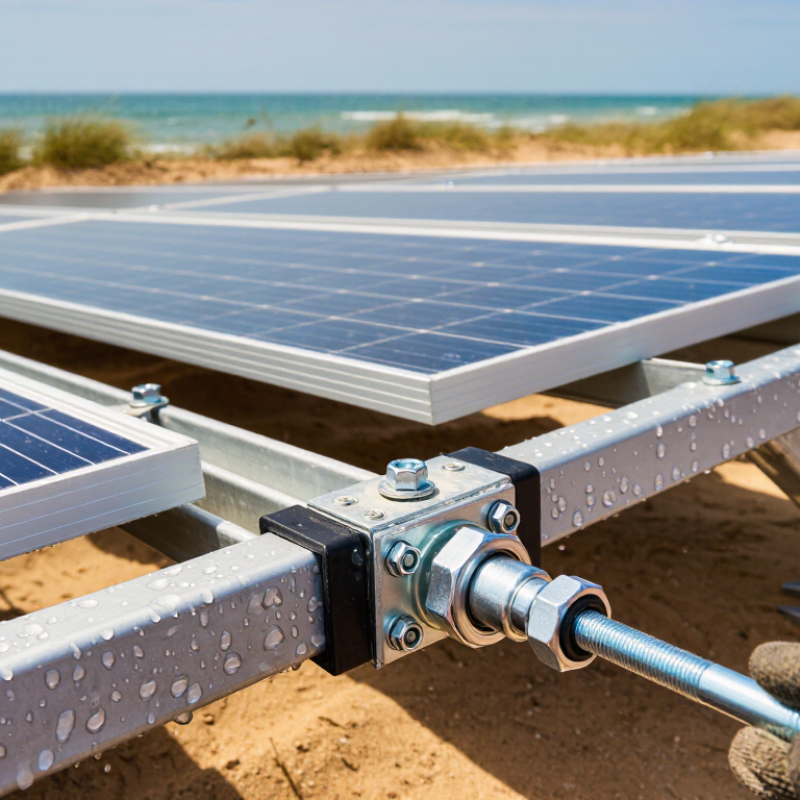
Understand Corrosion Risks in Coastal Solar Installations
Coastal solar corrosion is not just rust on a visible bolt. Salt carried by sea spray can settle on frames, rail edges, cable fittings, and tiny gaps around fasteners. When fog, humidity, or overnight condensation wets those deposits, chloride-rich moisture can attack exposed metal and weaken protective coatings. The damage may begin out of sight. A common clue is white residue near a joint, bubbling paint, or a fastener that turns stubborn during inspection.
Different metals also deserve attention. If dissimilar metals touch while salty moisture is present, galvanic corrosion can accelerate damage at the contact point. Windblown sand may scratch coatings, while poor drainage leaves salty water sitting beneath a clamp. These details are easy to overlook. A clean-looking panel surface does not prove its mounting hardware is sound, and inspection after a storm may reveal more than a quick visual check on a dry day.
Risk varies with distance from the shore, prevailing winds, site exposure, and installation details. “Coastal” is not one uniform condition. I would be cautious about relying on a fixed inspection schedule alone; salt can accumulate faster on exposed edges than on sheltered parts. Record early changes with close-up photos, especially around joints, cable entries, and areas where water collects.
Select Marine-Grade Materials and Corrosion-Resistant Fasteners
Salt spray reaches more than the visible shoreline. Wind-driven droplets collect under rail clamps, inside bolt heads, and along cut metal edges. Choose materials for the site’s actual exposure, not just its distance from the sea. The 2016 IMPACT study by NACE International, now AMPP, estimated corrosion costs at US$2.5 trillion annually, or 3.4% of global GDP. It is a broad industry estimate, not a solar-specific figure, but it shows why small material choices matter.
For exposed steel hardware, 316L stainless steel often offers better chloride resistance than 304, yet it can still pit in stagnant salt deposits. Rinse-prone surfaces and regular inspections help. In harsher splash zones, an engineer may specify duplex stainless steel, subject to load and compatibility checks. Use marine-grade aluminum only with a suitable coating system, and protect drilled or cut edges. Details matter.
Match fasteners to the structure. Stainless bolts touching bare aluminum can drive galvanic corrosion when saltwater bridges the metals. Install compatible isolation washers or sleeves, and keep drainage paths clear. Ask suppliers for alloy and coating certificates; check that washers, nuts, and bolts share a compatible specification. A label alone is not proof. Even good hardware can fail if installers scratch coatings or trap salty water beneath clamps. That part is easy to miss, and worth checking after the first storm season.
Protect Metal Surfaces with Coatings and Electrical Isolation
Salt-laden air can attack module frames, racking, fasteners, and cable fittings, especially where coatings are scratched. NACE International’s 2016 IMPACT study estimated global corrosion costs at US$2.5 trillion annually, or 3.4% of global GDP. That figure is not solar-specific, but it shows why small failures deserve attention. Salt finds scratches. Inspect cut edges, bolt heads, and water-trapping joints after storms, not only broad painted surfaces.
Choose a coating system suited to the metal and marine exposure, and prepare surfaces carefully before application. A thick coat over dirt or salt may peel; clean, dry surfaces matter more than appearance. Keep coatings off designated bonding points, where electrical continuity is required. Instead, use compatible bonding hardware and isolate dissimilar metals with suitable nonconductive washers or sleeves. Check seals for cracking, and replace damaged parts before corrosion spreads. IEC 61701 sets salt-mist test methods for photovoltaic modules, so ask whether equipment has been qualified for the site’s salt exposure. One detail is easy to miss: added isolation must not interrupt protective grounding. Review the installation drawings and verify continuity during maintenance. Small gaps matter.
7 Best Ways to Prevent Corrosion in Coastal Solar Installations
Protect metal surfaces with coatings and electrical isolation. The chart shows standard reduction potentials for selected metals—a useful baseline for understanding galvanic corrosion risk when dissimilar metals are electrically connected.
How to read it: Under standard conditions, a more negative reduction potential indicates a greater tendency for that metal to oxidize when coupled with a more noble metal. Actual behavior in seawater can differ because of passivation, coatings, and other environmental factors; use seawater galvanic-series data for material selection.
- Apply durable, marine-suitable protective coatings.
- Electrically isolate dissimilar metals at joints and fasteners.
- Select materials compatible with the coastal environment.
- Seal cut edges, drilled holes, and fastener interfaces.
- Design to prevent standing water and salt-trapping crevices.
- Rinse salt deposits from accessible surfaces periodically.
- Inspect regularly and promptly repair damaged coatings.
Values are approximate standard reduction potentials at 25°C versus the standard hydrogen electrode (SHE); they are not corrosion-rate measurements.
Design for Drainage, Ventilation, and Reduced Salt Exposure
Salt-laden air can leave a thin, conductive film on frames, fasteners, and cable hardware. Place rails and electrical enclosures away from direct wind-driven spray when the site allows. Keep equipment accessible for inspection. Give horizontal surfaces a slight fall, and avoid pockets where water can sit around bolts or beneath clamps. Small gaps matter. Water needs an exit. Use open-ended channels or designed drain paths, not improvised holes that could weaken components or compromise protection.
Leave clear airflow around modules and mounting members, especially where rows meet parapets or equipment screens. Ventilation speeds drying after fog, rain, and overnight condensation. Do not pack cable loops against metal edges. Secure them so they cannot rub, hold moisture, or form drip points above connectors. Salt deposits still build up. Plan safe access for periodic freshwater rinsing, following equipment instructions and site conditions. Drainage and ventilation help, but they cannot replace compatible materials, careful assembly, or routine checks for white deposits, blistering, and rust trails. A layout can look tidy on paper and still trap moisture behind a screen.
Clean, Inspect, and Maintain Solar Equipment Regularly
Salt air leaves a thin film on module frames, mounting rails, and cable connections. After windy or stormy weather, inspect for reddish rust, white salt deposits, pitting, and loose fittings. Rinse equipment with clean freshwater when its maintenance instructions allow; use a soft brush, not abrasives or high-pressure spray. Record findings with dated photos. Small changes are easier to track that way.
Tips: Schedule routine visual checks, with extra attention after storms. Keep drains clear, and check that cable connectors remain dry and secure. Cleaning frequency depends on local salt exposure and rainfall, so a fixed calendar may not fit every site. Follow qualified service procedures for electrical checks.
A 2013 review by Jordan and Kurtz in Progress in Photovoltaics analyzed about 11,000 degradation rates from 200 studies and reported a median rate near 0.5% per year. That figure covers PV degradation overall, not corrosion alone. Still, it shows why careful maintenance matters over time. NREL’s Best Practices for Operation and Maintenance of Photovoltaic and Energy Storage Systems also supports documented inspections and preventive maintenance. A spotless surface is not proof of sound connections; corrosion can begin where fittings meet, out of sight.
Conclusion
Coastal solar installations face accelerated corrosion because salt spray, high humidity, wind-driven moisture, and temperature changes can attack exposed metal and electrical connections. How to prevent corrosion in coastal solar mounting installations begins with understanding these local risks and choosing materials suited to marine environments, such as corrosion-resistant structural components and compatible fasteners. Protective coatings can add another barrier, while electrical isolation between dissimilar metals helps reduce galvanic corrosion.
Good system design also matters. Drainage and ventilation should limit standing water and trapped moisture, and layouts can reduce direct exposure to salt where practical. Regular cleaning removes accumulated salt deposits before they cause damage. Inspections should check for coating wear, rust, loose connections, and blocked drainage, allowing maintenance to address small issues early and help preserve the system’s safety, durability, and performance.

 Illumino Solar