How to Choose Between Fixed Tilt and Solar Trackers?

Time:2026-09-23 Author:Aria
0%

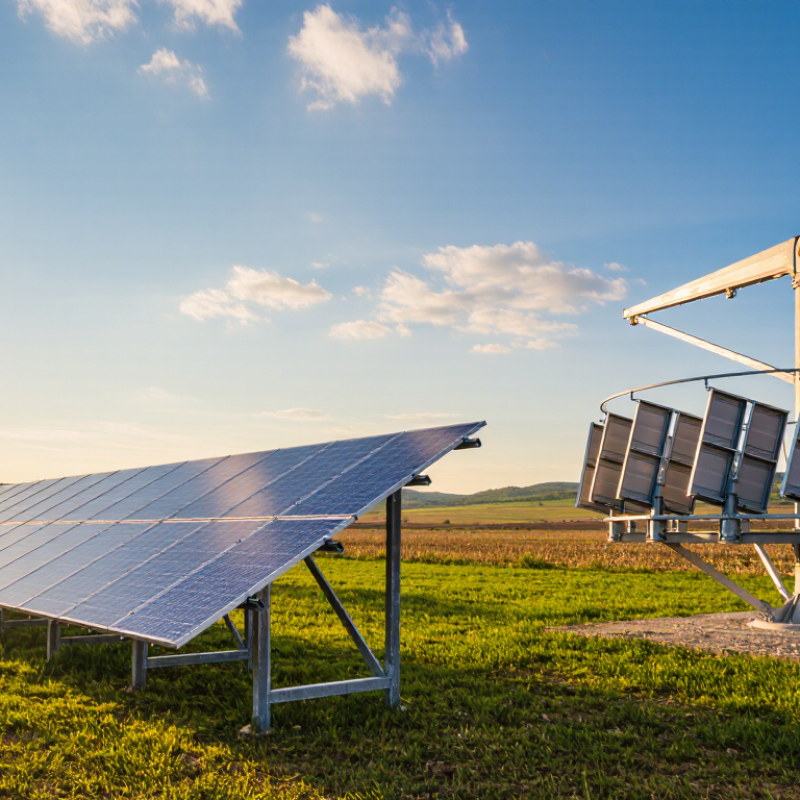
Choosing a solar mounting system is not simply a choice between lower cost and higher output. It is a site-specific engineering decision. What is the difference between fixed tilt and solar trackers? Fixed-tilt arrays hold modules at one angle throughout the year. Trackers rotate modules to follow the sun, usually from east to west. This movement can increase daily energy capture, especially during morning and afternoon hours.

The market context matters. IRENA’s Renewable Capacity Statistics 2024 reported more than 345 GW of new solar capacity added globally in 2023. This rapid expansion has increased demand for dependable, cost-effective system designs. Berkeley Lab’s Utility-Scale Solar report also shows that single-axis tracking is widely used in recent United States utility-scale projects. However, fixed tilt remains practical for smaller sites, rooftops, steep terrain, and projects with limited maintenance access. More output is not always better.

Trackers need motors, controllers, foundations, and additional inspection. Dust, wind, snow, and uneven ground can reduce their expected advantage. Fixed-tilt systems have fewer moving parts and may offer simpler long-term operation. Yet they can leave valuable sunlight unused during low-angle morning and evening periods. The right decision depends on land value, irradiation, module prices, financing, grid limits, and local weather data. PVsyst or NREL PVWatts simulations can reveal differences that a simple brochure cannot. Real projects rarely behave perfectly. That deserves careful reflection.

This guide compares energy yield, capital cost, operating risk, land use, and maintenance requirements. It also considers practical lessons from utility-scale solar development. The goal is not to promote one technology. It is to identify the system that performs reliably on your specific site.
How to Choose Between Fixed Tilt and Solar Trackers?

Understanding Fixed-Tilt Solar Mounting Systems

Fixed-tilt solar mounting systems hold panels at one set angle throughout the year. Their simple structure usually requires fewer moving parts, which can reduce maintenance and installation complexity. A well-chosen tilt should reflect the site’s latitude, roof design, and seasonal sunlight. However, the “perfect” angle rarely exists. Energy demand, winter shading, and local weather may matter more than a basic calculation.

On a roof, installers should inspect structural capacity, waterproofing, and available space before selecting the mounting layout. On the ground, row spacing needs careful planning. Panels can cast long shadows during winter mornings.

Fixed systems also handle strong wind more predictably when properly engineered. Trackers may capture more sunlight in some locations, but they require motors, controls, and extra maintenance. That additional yield is not always worth the added cost or complexity.

Field experience suggests that a reliable fixed system can outperform a poorly maintained tracker over time. Still, this depends on the site.

Tips: Measure shading across the year. Check snow and wind conditions. Leave access for cleaning and inspection. Compare annual energy gain, not peak output alone. Ask an engineer to verify roof loads and attachment details. I would also review the design after the first winter. Real conditions often reveal assumptions that drawings miss.

Explaining How Solar Trackers Improve Energy Capture

Choosing between fixed tilt and solar trackers depends on how much extra sunlight the site can use. Trackers rotate panels toward the sun, extending production into morning and afternoon. NREL’s 2024 Annual Technology Baseline indicates that single-axis tracking can raise annual energy yield by roughly 15–25% compared with fixed tilt, depending on latitude, weather, and system design. More energy is not automatic.

The Berkeley Lab Utility-Scale Solar report found that single-axis trackers represented about 94% of newly built utility-scale capacity in 2023. That figure shows strong industry confidence. It does not make trackers suitable everywhere. Trackers need wider row spacing, moving parts, control systems, and protection during high winds. A dusty site may also increase inspection needs. I have seen energy models look impressive before shading and maintenance were fully considered.

Fixed-tilt systems remain attractive on smaller sites, steep terrain, or projects with limited maintenance access. Their simple steel structure offers fewer mechanical failure points. Trackers often perform best where land is available and afternoon electricity has strong value. The right comparison should include lifetime energy, not only installation cost. Check wind loads, soil conditions, cleaning access, and local irradiance data. A 20% modeled gain can shrink in practice. That gap deserves attention.

Comparing Installation Costs, Output, and Maintenance

Fixed tilt and solar trackers differ most in installation cost, energy output, and maintenance exposure. NREL’s 2024 Annual Technology Baseline indicates that single-axis tracking systems generally require higher upfront costs than fixed-tilt arrays. The premium often comes from motors, bearings, control systems, and stronger foundations. In practical projects, trackers may add roughly 5% to 15% to installed costs, depending on terrain and equipment prices. Fixed tilt is simpler.

Output can justify that premium in suitable locations. The IEA PVPS Task 13 report finds that tracking can raise annual energy yield by approximately 15% to 25% compared with fixed tilt. Trackers follow the sun, improving morning and afternoon production. This can support projects with high-value evening electricity. However, dusty sites, steep slopes, and weak grid connections reduce the benefit. More output is not guaranteed.

Maintenance requires closer attention. Trackers introduce moving parts, wiring, sensors, and software controls. Field inspections may involve lubricating bearings, replacing actuators, and checking row alignment. The U.S. Department of Energy’s 2023 Solar Futures analysis highlights operations and maintenance as a meaningful lifetime cost for utility-scale projects. Fixed-tilt systems usually have fewer failure points and easier access. That simplicity has value. Still, I would not choose fixed tilt automatically. A detailed yield study should compare local irradiance, land grading, labor rates, cleaning needs, and electricity pricing. Early estimates can be misleading when they ignore terrain.

Evaluating Site Conditions, Climate, and Available Land

Choosing between fixed tilt and solar trackers starts with the site, not the equipment. A site visit reveals shadows, slopes, soil conditions, and access problems that maps often miss. Walk the land carefully. Record shading at different times of day and seasons. Fixed systems usually suit simple terrain and predictable construction. Trackers can increase energy production, but they require more moving parts, wider row spacing, and stronger maintenance planning.

Climate can change the decision quickly. In high-wind areas, tracker structures may need frequent stow positions and stronger foundations. Snow can cover modules, especially when rows sit close together. Dust, salt air, and heavy rainfall also affect cleaning schedules and electrical reliability. A professional assessment should combine solar resource data with local wind, snow, temperature, and flood records. Still, no model is perfect. Weather patterns can shift, and historical data may not reflect future conditions.

Available land often decides the practical answer. A narrow or irregular parcel may favor fixed tilt because trackers need space to rotate without causing row shading. Fixed arrays also simplify road layouts and vegetation control. Trackers may produce more energy per module, but their larger footprint can increase grading, drainage, and fencing costs. I have seen early estimates overlook maintenance lanes, then require expensive redesigns. Compare lifetime energy, land use, soil reports, construction access, and routine service needs before selecting a layout.

How to Choose Between Fixed Tilt and Solar Trackers?

Evaluating site conditions, climate, and available land is essential when comparing fixed-tilt systems with single-axis trackers. Trackers generally increase annual energy yield, but they also require more land and wider row spacing.

How to read the chart: Annual energy yield is shown in kilowatt-hours per kilowatt-peak per year, while land requirement is shown in hectares per megawatt. Tracker gains are typically greater in high-irradiance locations, but sites with limited land, complex terrain, or frequent extreme winds may favor fixed tilt.

Selecting the Best System for Your Solar Project

Selecting the best solar system starts with the project’s real conditions, not a preferred technology. Fixed-tilt structures suit sites with limited maintenance access, moderate land prices, and stable sunlight patterns. Trackers can produce more energy, especially where direct sunlight is strong. However, their motors, controls, and moving parts require additional inspections.

Measure before deciding. Review at least one year of irradiance data, wind records, snowfall, soil conditions, and terrain slopes. A steep or uneven site may increase tracker installation costs. Dust can also reduce output and create more cleaning work. Small details matter.

The financial model should compare lifetime energy, not only peak production. Include foundations, wiring, spare parts, labor, insurance, and replacement schedules. A tracker may deliver higher annual yield but still lose value if maintenance access is difficult. Fixed tilt can be less productive per panel, yet easier to operate and finance.

Keep the design practical. Very strong winds may require conservative tracker stow settings and stronger foundations. Heavy snow can demand careful clearance and loading calculations. Local engineering review remains essential.

There is no universal winner. A reliable choice depends on measured conditions and realistic operating skills. Some early estimates will be wrong. That is normal. Recheck assumptions with field surveys, independent engineering opinions, and sensitivity testing before equipment is ordered.

FAQS

What is a fixed-tilt solar mounting system?

It holds panels at one angle throughout the year. The structure has few moving parts. That can simplify installation and maintenance.

How should the tilt angle be selected?

Consider the site’s latitude, roof shape, and seasonal sunlight. Winter shading and energy demand also matter. A basic formula may not fit every location.

What should be checked before installing panels on a roof?

Inspect roof strength, waterproofing, attachment points, and usable space. An engineer should verify the roof loads. Drawings can miss real weaknesses.

Why does row spacing matter for ground-mounted panels?

Panels can cast long shadows on winter mornings. Wider spacing may reduce energy loss. It also creates space for cleaning and inspections.

How much more energy can a single-axis tracker produce?

It may produce roughly 15–25% more annual energy than fixed tilt. Results depend on latitude, weather, shading, and system design. The modeled gain may shrink.

When can fixed-tilt systems be a better choice?

They suit smaller sites, steep terrain, and limited maintenance access. Their simple steel structure has fewer mechanical failure points. Simple can be valuable.

What extra requirements do solar trackers have?

Trackers need motors, controls, wider row spacing, and wind protection. Dusty locations may require more inspections. Moving parts can create additional maintenance work.

How should fixed systems and trackers be compared?

Compare lifetime energy, maintenance, land use, and total cost. Do not judge only by peak output or installation price. Review the design after the first winter.

Conclusion

Choosing between fixed-tilt solar mounting systems and solar trackers depends on your project goals, budget, and site conditions. Fixed-tilt systems hold panels at a set angle, making them simpler to design, install, and maintain. They generally require fewer moving parts and can offer reliable performance where land, sunlight, and seasonal conditions are relatively consistent. What is the difference between fixed tilt and solar trackers? Trackers adjust the panel position throughout the day, helping panels receive more direct sunlight and potentially increasing energy production, especially in areas with strong, consistent solar resources.

However, trackers usually involve higher installation costs, more complex equipment, and greater maintenance needs. They may also require additional land, careful structural planning, and protection against wind, snow, or other environmental conditions. Fixed-tilt systems can be a practical choice for projects prioritizing simplicity and predictable costs, while trackers may suit developments where maximizing energy output justifies the added investment. Evaluating climate, terrain, available space, expected electricity demand, and long-term operating goals will help determine the most suitable system.

Aria

Aria

Aria is a dedicated marketing professional with a deep passion for innovative strategies and a keen understanding of our company's product offerings. With a wealth of experience in the industry, Aria excels at crafting engaging content that highlights the unique features and benefits of our......